Thursday, 18 November 2010

Case study into a radio station !

CHOICE FM

Choice 96.9 began as an independent company in March 1990, broadcasting from studios in Trinity Gardens, Brixton. It was Britain’s first 24 hour black music radio station with a licence, covering South London. The group won a second licence in 1995, bringing a local version of their London offering to Birmingham, on 102.2 FM - in place of Buzz FM.

The advent of digital radio in the UK saw Choice, which already had an active webstream, joining the new MXR consortium and launching a DAB service which anchored London output with news inserts produced by the consortium's news service DNN.
The Birmingham licence was sold to Chrysalis Radio in 1999 and became Galaxy Birmingham, but Choice expanded within the capital in May 2000 when a largely independent North London licence was awarded for Choice 107.1, with the intention of reaching a larger Afro-Caribbean audience outside the limited range of the coverage from Brixton. The station was now broadcasting from Borough High Street, Borough, London.
Having previously been a minority shareholder, Capital Radio Group took full control of the station in February 2004 and moved the station's base from the target service area to the group's central studios in London's LeicesterSquare. The move resulted in a community march from the coverage area and their studios.


According to Rajar statistics , Choice FM reaches an audience of 480 , 000 viewers in the UK.
Choice FM is an urban radio station , like ours (money-music)
The news presented on CHOICE FM is mostly celebrity entertainment news . The presenters are both male and female . Their target audience seems to be young teenagers.

OFCOM


OFCOM is the regulator of communication industries in the UK. OFCOM helps fight to prevent offensive material being produced.
ADMINISTRATIVE LEADERSHIP !
The current chairwoman of OFCOM is Colette Bowe . The current chief executive is Ed Richards.He is responsible for : Strategy , Market Research ,  Finance , Human Resources and other functions.
RESPONSIBILITIES
OFCOM has a wide range of responsibilities. It has a duty to protect its consumers of harmful and offensive material.
PROGRAMME COMPLAINTS !
One of OFCOM's duty is to identify the problems and issues raised by its consumers about certain programmes. When OFCOM receives a complaint , it asks the broadcaster for a copy of the programme and then examines it to see if it is in breach of the broadcasting code. OFCOM also asks for a response from the broadcaster to the complaint. Considering this , OFCOM will mark the complaint as either upheld or not upheld , or alternatively 'resolved'.
LICENSING
OFCOM is responsible for the management , regulation and assignment of the electromagnetic spectrum in the UK , and licenses portions of it for TV and radio broadcasts , mobile phone transmissions etc. The process of licensing varies depending on the usage required. Some licenses simply have to be applied for , others are subject to a bidding process. Previous regulators have determined the procedures , however OFCOM might change this in the future .

History Of radio !

Two years after the telephone was invented and music was sent down a telephone line , Guglielmo Marconi sent radio signals.
Marconi (1874-1937) was fascinated by Heinrich Hert'z earlier discovery of radio waves and realised it can be used for sending and receiving telegraph messages , referring to it as 'wireless telegraphs'.
Marconi’s first radio transmissions, in 1896, were coded signals that were transmitted only about a mile (1,6 km) far. Marconi realized that it held huge potential. He offered the invention to the Italian government but they turned it down. He moved to England, took out a patent, and experimented further. In 1898 Marconi flashed the results of the Kingstown Regatta to the offices of a Dublin newspaper, thus making a sports event the first “public” broadcast. The next year Marconi opened the first radio factory in Chelmsford, Essex and established a radio link between Britain and France. A link with the USA was established in 1901. In 1909 Marconi shared the Nobel prize in physics for his wireless telegraph. Marconi became a wealthy man.

Signals only
But Marconi’s wireless telegraph transmitted only signals. In 1921 , came 'Voice over the ai'r, as we know radio today. Marconi went on to introduce short wave transmission in 1922.
Marconi was not the first to invent the radio, however. Four years before Marconi started experimenting with wireless telegraph, Nikola Tesla, a Serb who moved to the USA in 1884, invented the theoretical model for radio. Tesla tried unsuccessful to obtain a court injunction against Marconi in 1915. In 1943 the US Supreme Court reviewed the decision. Tesla became acknowledged as the inventor of the radio – even though he did not build a working radio.

There are other radio inventors :
Bose repeated his demonstration in the Royal Society in London in 1899 in the presence of Lord Rayleigh (Nobel prize winner in Physics, 1904), J.A. Fleming (Professor at London university and later an advisor to the Marconi company), and Lord Lister (President of the Royal Society). As a result he was offered Professorship in Cambridge, but declined.
Bose had solved the problem of the Hertz not being able to penetrate walls, mountains or water. Marconi was present in the meeting of the Royal Society and it is thought that he stole the notebook of Bose that included the drawing of the ‘Mercuri Coherer with a telephone detector’. Marconi’s Coherer, which he used in 1901, was the exact copy of that of Bose. Apparently Marconi was unable to explain how he got to the design. He said that an Italian Navy engineer called Solari had developed it, but Solari later denied it. Marconi then said that Italian Professor Timasina did, which later was exposed as a lie by another Italian professor, Angelo Banti, who claimed that the design was invented by signalman Paolo Castelli.
Bose did not apply for a patent on his design because he believed in the free flow of inventions in science. But under pressure from American friends, he applied for the patent in September 1901. He was awarded the US patent for the invention of the radio in 1904. By that time Marconi had received his patent and international recognition.
Nathan B Stubblefield“Hello Rainey!”
It is reputed that Nathan B. Stubblefield, a farmer from Murray, Kentucky, made a voice transmission four years before Marconi transmitted radio signals. In 1892, Stubblefield handed his friend Rainey T. Wells a box and told him to walk away some distance. Wells said later: “I had hardly reached my post.. when I heard I heard HELLO RAINEY come booming out of the receiver.”
Stubblefield demonstrated his invention to the press in 1902 but, being afraid that his invention will be stolen, never marketed his wireless radio. When he was found dead in 1929, his radio equipment was gone.
Nikola Tesla remains acknowledged as the inventor of the radio.
Radio everywhere
Today, there are more than 33,000 radio stations around the world, with more than 12,000 in the US alone. Worldwide there are more than 2 billion radio sets in use, or about one radio for every 3 persons; proof that video never killed the radio star.


See: The history of radio 

Technology in Radio !

DIGITAL - Technology that uses discrete discontinuous values . On the other hand , non-digital ( analogue ) systems tend to use a continuous range of values to represent information.
CONVERGENCE - Technology combined . i.e The iPhone and xbox
MINIMISATION - Reducing technology to its minimum .  For example ,stereo- players are much smaller these days.
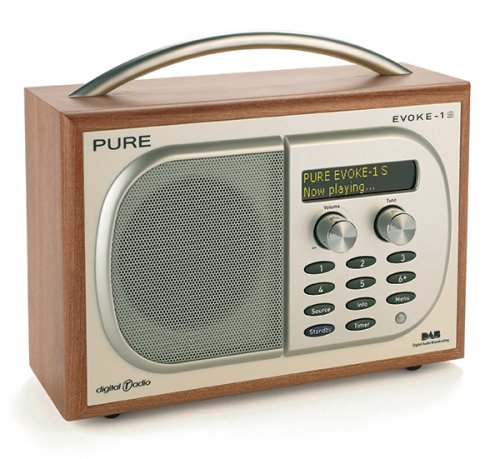
DAB RADIO - This is technology used to broadcast radio stations , used in several countries , particularly Europe .


ADVANTAGES OF DAB RADIO !

  • You can pause , rewind and record on DAB Radio .
  • The sound quality is much better , as opposed to Analogue Radio.
  • DAB Radio tends to look more stylish than the Analogue Radio.

ADVANTAGES OF ANALOGUE RADIO !

  • Analogue Radio tends to be of higher density , compared to DAB Radio.
  • Fine definition of the analogue signal